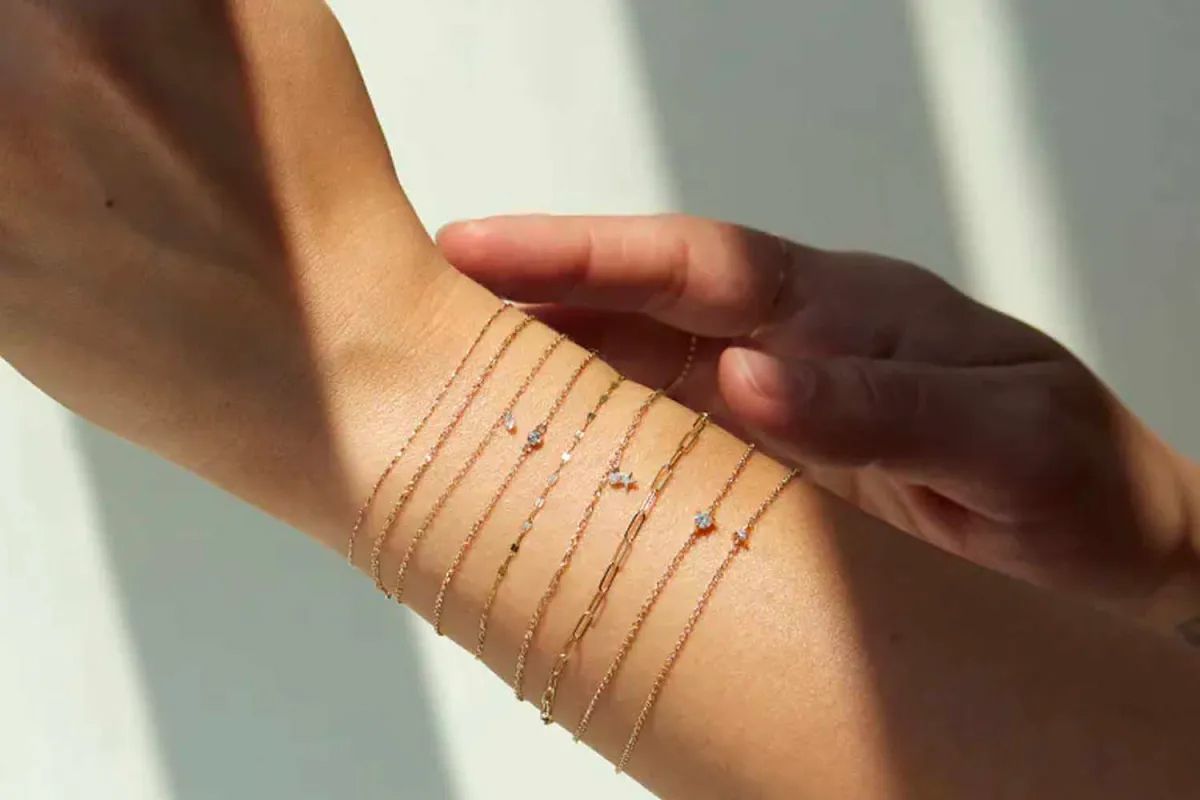
What is permanent jewelry, at its simplest, is a piece of jewelry—usually a bracelet, anklet, or necklace—that doesn’t have a traditional clasp. Instead, it’s custom-fitted to your body and then welded shut using a tiny jump ring. No clasp. No opening. Just… there.
And it sounds a bit intense at first, right? Like “permanent” anything usually does. But don’t worry—it’s not as dramatic as it sounds.
The idea behind what is permanent jewelry is more about symbolism than restriction. It’s about connection, commitment, memory, or even just style that you don’t have to think about every morning.
You put it on once. And it just becomes part of you.
But let’s break it down properly, because there’s more going on here than just a bracelet that doesn’t come off.
The meaning behind permanent jewelry
People don’t just ask what is permanent jewelry because they’re curious about fashion. A lot of the time, they’re trying to understand the emotional side of it too.
Some people get matching pieces with friends. Some do it with partners. Others just do it solo as a personal milestone—like “I made it through something” kind of energy.
And honestly, it doesn’t always have to mean something deep. Sometimes it’s just… pretty and convenient.
But still, there’s something about it that feels a bit symbolic. Like you’re marking a moment and letting it stay with you.
Not in a loud way. More like a quiet reminder on your wrist.
How permanent jewelry is actually done
So here’s where it gets interesting.
When you go to get permanent jewelry, you usually pick a chain first. Thin gold, sterling silver, maybe something dainty or minimal depending on your style.
Then the jeweler measures it directly on your wrist, ankle, or neck. They adjust it until it feels right—snug but not tight.
After that, they use a small welding tool to close the chain. It creates a tiny spark—quick, almost blink-and-you-miss-it kind of moment. And that’s it. It’s sealed.
No pain. No needles. Nothing scary.
And if you were wondering while searching what is permanent jewelry—this is the part most people imagine wrongly. It’s not “attached” to your skin. It just sits there like normal jewelry, but closed permanently.
Is it actually permanent though?
This is where things get a bit misleading sometimes.
When people hear what is permanent jewelry, they think it means “you can never remove it.” That’s not fully true.
It’s permanent in the sense that it doesn’t have a clasp. But it can be removed if needed—usually by cutting the small jump ring with scissors or wire cutters.
So it’s more like “long-term jewelry” than something that traps you forever.
You can take it off for medical procedures, airport security in rare cases, or just personal preference later. It’s not irreversible.
Still, most people keep it on for months or years without even thinking about it.
What materials are used?
Not all chains are created equal, and this matters a lot when you’re thinking about what is permanent jewelry in terms of quality.
Most permanent jewelry uses:
- 14k or 18k gold
- Gold-filled chains
- Sterling silver
- Stainless steel (less common in luxury pieces)
Gold-filled is actually pretty popular because it looks like solid gold but is more affordable.
And since it’s meant to be worn all the time—even in showers, sleep, workouts—you want something that won’t tarnish easily.
But yes, cheaper options exist too. Just don’t expect them to last forever looking brand new.
Does it hurt to get permanent jewelry?
Short answer: no.
Long answer: you might feel a tiny spark of anxiety if you’re overthinking it, but physically? Nothing.
The welding process doesn’t touch your skin. It only fuses the metal link.
So when people search what is permanent jewelry, thinking it might involve needles or piercing-type pain, it really doesn’t.
It’s closer to getting your necklace “clicked into place” with light.
Why people are obsessed with it
There’s a reason this trend keeps showing up everywhere—Instagram, TikTok, jewelry pop-ups…
It’s simple. It’s low-maintenance. It looks good all the time.
No fiddling with clasps. No worrying about losing it. No deciding what jewelry to wear each day.
And honestly, life is already full of decisions. This one just… stays done.
Some people also love the emotional angle. Like a friendship bracelet that never comes off. Or a reminder of a trip, a moment, a person.
But even without meaning, it still works as a clean, minimal aesthetic piece.
Downsides nobody talks about much
Okay, let’s be real for a second.
When people ask what is permanent jewelry, they usually hear only the good stuff. But there are a few things worth knowing.
First, you can’t easily switch it out. If you like changing jewelry daily, this might feel limiting.
Second, depending on your lifestyle, chains can stretch or break over time. It’s not super fragile, but it’s not indestructible either.
Third, if you need to remove it, you’ll probably need scissors or a jeweler. Not difficult, just not as convenient as a clasp.
So yeah… it’s not perfect for everyone.
But nothing really is.
How much does permanent jewelry cost?
Prices vary a lot depending on material and design.
On average:
- Sterling silver: more affordable range
- Gold-filled: mid-range
- Solid gold: higher end
You’re usually paying for both the chain and the welding service.
Some studios charge per inch, others have flat pricing per piece.
When people first search what is permanent jewelry, they’re often surprised it’s not super cheap—but it’s also not luxury-only either. It sits in that middle space.
Can you shower or sleep with it?
Yes. That’s kind of the whole point.
You can shower, swim, sleep, exercise—basically live normally with it on.
In fact, most people forget they’re even wearing it after a while. It just becomes part of them.
Still, if you go swimming in salt water or chlorinated pools often, gold-filled or solid gold holds up better long term.
Care tips (simple, not complicated)
Taking care of permanent jewelry isn’t a full-time job.
Just:
- Wipe it occasionally with a soft cloth
- Avoid harsh chemicals when possible
- Check the weld point if it feels loose
- Get it re-welded if needed
That’s pretty much it.
Nothing fancy. Nothing high maintenance.
What happens if it breaks?
It can happen. Life happens.
If the chain breaks, you don’t lose the whole piece. You usually just bring it back to the jeweler and they re-weld it.
Sometimes the original chain can be reused. Sometimes a small repair is needed.
It’s not the end of the world, even if it feels annoying in the moment.
Who should (and shouldn’t) get it?
Permanent jewelry fits people who like:
- Minimal effort style
- Everyday accessories
- Sentimental pieces
- Clean, consistent look
But it might not be ideal if you:
- Change jewelry constantly
- Need removable accessories for work or sport
- Prefer bold, statement pieces that rotate often
And that’s okay. It’s not meant to be for everyone.
A small shift in jewelry culture
If you think about it, what is permanent jewelry isn’t just a trend—it’s part of a shift in how people wear accessories now.
Less fuss. More meaning. Or sometimes, just less thinking overall.
Jewelry used to be something you put on for occasions. Now it’s becoming something you just… live in.
And permanent jewelry fits right into that shift.
Quiet, simple, always there.
FAQs about permanent jewelry
Does it set off airport metal detectors?
Usually no, unless it’s a larger or thicker chain.
Can I choose the style?
Yes, you pick chain type, thickness, and metal.
Is it safe for sensitive skin?
Most high-quality metals are skin-safe, but always check materials first.
Can I remove it anytime?
Yes, it just needs to be cut off carefully.
Final thoughts
So after all this, what is permanent jewelry really?
It’s not just a bracelet without a clasp. It’s not just a trend from social media either.
It’s a mix of style, convenience, and a bit of emotion—depending on what you want it to be.
Some people wear it as a memory. Some as a fashion choice. Some just because it makes life easier.
And honestly, that’s probably why it’s sticking around. It doesn’t force a meaning on you. It just stays.
